Landmark Religious Freedom Ruling in Britain
By John Steenhof
Sydney Morning Herald
Britain's second-highest court handed down a decision on religious freedom yesterday that will send chills down the collective spine of Rugby Australia. In contrast, Israel Folau and his team will be thanking God for divine providence that is akin to manna from heaven.
In Ngole v the University of Sheffield, the English Court of Appeal has decided: “The mere expression of religious views about sin does not necessarily connote discrimination.”
The factual similarities to Folau’s case are remarkable. Felix Ngole was a social work student at the University of Sheffield and a devout Christian. In 2014, he posted Bible verses about homosexuality on a public Facebook page as part of a political debate. Sheffield University accused Ngole of breaching a vague and broadly worded code of conduct.
Through a hearing and two committee appeals, various bureaucratic apparatchiks repeatedly incanted that quoting Bible verses constituted “views of a discriminatory nature” and breached professional guidelines.
As the British appeal court stated: “The university wrongly confused the expression of religious views with the notion of discrimination. The mere expression of views on theological grounds (e.g. that "homosexuality is a sin") does not necessarily connote that the person expressing such views will discriminate on such grounds.”
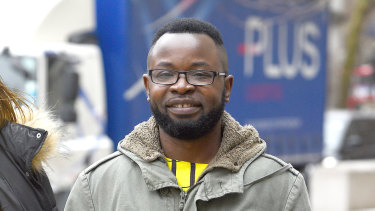
Felix Ngole arrives at court in London, where he challenged a ruling that he was lawfully removed from a Sheffield social work course after being accused of posting comments about homosexuals and bisexuals on a Facebook page.
This lines up almost exactly with Folau’s case.

