The Slow-Release Poison of Post-Modernism
The question of what changed in society to enable it to develop from mediaevalism to modern economic powerhouses is a fascinating one. One centrally important change was in the way men thought about the world and their place in it. Who am I? Why am I here and alive? What are my duties and responsibilities?
Medieval man had a set of fairly standard answers to these questions. Modernist man had a different understanding of life and being, and answered these questions differently. Post-modern man has a different set of answers again. The different answers were (and are) all religious in nature.
The change from medievalism to modernism took place amidst developments in Christian doctrine; those changes in understanding essentially produced what we call the Modern period.
Modernism itself then went through two major developmental stages. Early modernism was essentially Christian in nature and philosophy: it answered the questions above accordingly. Later modernism moved away from orthodox Christianity to deistic-atheism, changing its answers to reflect this. Post-modernism's religion, for its part, is materialistic atheism. In each of these stages or phases, the questions above have been answered differently. The outcome and results have been very different.
Charles Taylor documents the post medieval, early modern answers to the questions, who am I? why am I here? and what are my duties and responsibilities? A major change that moved Europe from mediaevalism to the modern age had to do with "secular" work. Taylor's is one of the best summaries we have read:
Showing posts with label Modernism. Show all posts
Showing posts with label Modernism. Show all posts
Friday, 22 May 2015


Thursday, 26 February 2015
Having Cake and Eating It Too
The Self Deceit of the Modern Mind
Chesterton writes the following on the indifference of nature. As you read this passage, keep David Attenborough in mind, an evolutionist whose breathless reverent descriptions of the natural world and its inhabitants represents the stupidest sentimentality since stupidity first emerged (from the primordial slime, naturally.)
Chesterton writes the following on the indifference of nature. As you read this passage, keep David Attenborough in mind, an evolutionist whose breathless reverent descriptions of the natural world and its inhabitants represents the stupidest sentimentality since stupidity first emerged (from the primordial slime, naturally.)
There is no equality in nature; also there is no inequality in nature. Inequality, as much as equality, implies a standard of value. To read aristocracy into the anarchy of animals is just as sentimental as to read democracy into it. Both aristocracy and democracy and are human ideals: the one saying that all men are valuable, the other that some men are more valuable. But nature does not say that cats are more valuable than mice; nature makes no remark on the subject. She does not even say that the cat is enviable or the mouse pitiable.
Wednesday, 30 April 2014
A Modern Take on a Venerable Folk Tale
Who Will Help Me . . . ?
The parable of the Little Red Hen has been read to countless generations of children. It is an old folk tale, probably Russian in origin. Its ethical point is delightfully made. "He who will not work, let him not eat", said the Apostle Paul, to which the Little Red Hen says, "Amen".
There are countless applications of the parable, but one in particular caught our attention recently. It concerns the wistfulness sometimes expressed by moderns for the "good old days" by which is meant a longing for Christian ethics and values once held by society, whilst rejecting Christian metaphysics and theology. The particular occasion was a review of a series of radio programmes in the UK featuring a prominent Guardian journalist, Madeleine Bunting, bestowing her reflections about Holy Week upon her listeners.
Charles Moore, writing in The Telegraph, reviewed her ruminations, thus:
The parable of the Little Red Hen has been read to countless generations of children. It is an old folk tale, probably Russian in origin. Its ethical point is delightfully made. "He who will not work, let him not eat", said the Apostle Paul, to which the Little Red Hen says, "Amen".
There are countless applications of the parable, but one in particular caught our attention recently. It concerns the wistfulness sometimes expressed by moderns for the "good old days" by which is meant a longing for Christian ethics and values once held by society, whilst rejecting Christian metaphysics and theology. The particular occasion was a review of a series of radio programmes in the UK featuring a prominent Guardian journalist, Madeleine Bunting, bestowing her reflections about Holy Week upon her listeners.
Charles Moore, writing in The Telegraph, reviewed her ruminations, thus:
Tuesday, 14 January 2014
Moderns Versus the Gospel
The War of the World(view)s
The Bible has much to say about God and about how we can come to know him. What is says is deeply at odds with much of the thinking in the modern world. And this fundamental difference generates differences in many other areas--differences in people's whole view of the world. Modern worldviews are at odds with the worldview put forward in the Bible. This difference in worldviews creates obstacles when modern people read and study the Bible People come to the Bible with expectations that do not fit the Bible, and this clash becomes one main reason, though not the only one, why people do not find the Bible's claims acceptable. [Vern Poythress, Inerrancy and Worldview: Answering Modern Challenges to the Bible (Wheaton, Illinois: Crossway, 2012), p. 14.]
It is incumbent upon Christians to understand what is going on when moderns, often with disdain and ridicule, reject the Bible. There is not just a clash between the reader and the text. Now the Bible is worlds apart from the modern view--or more precisely, worldviews apart. This was not always the case. Generally, when an Unbeliever approached the Bible during the first Christendom (roughly 800AD to 1700AD) he would come knowing about, if not believing in, a creator. He would also come to the Bible already believing in heaven and hell, in divine judgment, in moral guilt, sin, and punishment. Most likely he would also believe in the Christ. In other words, he would come with the general worldview of the Bible already in situ and largely intact.
No longer. Modernism and post-modernism have excised such beliefs from the modern Unbelieving mind.
Friday, 19 July 2013
Books
Book of the Month/July
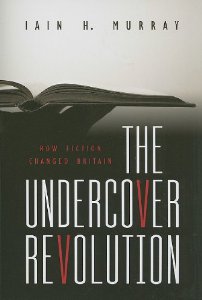
I have read and enjoyed and profited from a number of Iain Murray’s other books, and in the realm of enjoyment and edification, this book was no different. But it was very different from his other books in several other respects.
The book-of-the-month this time around is The Undercover Revolution, and it is about how infidel novelists wrecked Great Britain. He gives a detailed treatment of two writers, Robert Louis Stevenson and Thomas Hardy, then moves on to show how a swarm of writers transformed British culture, and concludes with a fine statement of the basic Christian gospel.
Friday, 19 April 2013
Modern Niceties
Secularist Persecution
In the early chapters of his book on Constantine, Peter Leithardt sets the scene of Constantine's accession to the purple, documenting the reign of Diocletian. As part of the scene-setting, he reviews the Diocletian persecution of the Church, which commenced in 303AD. It was pretty gruesome stuff. The move was a failure, although the suffering and bloodshed real enough.
Leithardt also reviews modern revisionist views of Roman persecution of Christians in general, and Diocletian's in particular. The revisionism began with the Enlightenment which had a general commitment to a piece of deliberate propaganda: the Christian religion was perverse superstition; therefore, the classical age that preceded it was the watershed of human sophistication and cultural maturity. The Enlightenment was deliberately styled as a movement to recapture of the high points of classical culture, so that mankind could continue on its glorious upward trajectory. In order to do so it must throw off the chains of Christian superstition and recapture the glories of ancient Greece and Rome.
This particular piece of propaganda meant that the persecution of the Church by the Roman Empire needed some decent revisionist work.
In the early chapters of his book on Constantine, Peter Leithardt sets the scene of Constantine's accession to the purple, documenting the reign of Diocletian. As part of the scene-setting, he reviews the Diocletian persecution of the Church, which commenced in 303AD. It was pretty gruesome stuff. The move was a failure, although the suffering and bloodshed real enough.
Leithardt also reviews modern revisionist views of Roman persecution of Christians in general, and Diocletian's in particular. The revisionism began with the Enlightenment which had a general commitment to a piece of deliberate propaganda: the Christian religion was perverse superstition; therefore, the classical age that preceded it was the watershed of human sophistication and cultural maturity. The Enlightenment was deliberately styled as a movement to recapture of the high points of classical culture, so that mankind could continue on its glorious upward trajectory. In order to do so it must throw off the chains of Christian superstition and recapture the glories of ancient Greece and Rome.
This particular piece of propaganda meant that the persecution of the Church by the Roman Empire needed some decent revisionist work.
Thursday, 3 January 2013
Letter From Australia (About Liberal "Christianity")
Studied irrelevance
Peter Barnes
Normally one looks to the New York Times for wisdom in the same way that one might look for gold in a rubbish dump – it may be there, but it will take a lot of digging, and the prospects of success are not great. Yet, on 14 July, 2012 the Times published an article by Ross Douthat on ‘Can Liberal Christianity Be Saved?’
Douthat referred to John Shelby Spong’s book, Why Christianity Must Change or Die, and noted how the Episcopal Church in the USA had essentially followed Spong’s lead, and transformed itself from being a rather sedate pillar of the WASP establishment to being a selfconsciously progressive body in terms of its beliefs and its ethics. Yet the result has not been life but death.
As Douthat writes, “if conservative Christianity has often been compromised, liberal Christianity has simply collapsed”.
Liberal Christianity is merely unbelief dressed up.
Peter Barnes
Normally one looks to the New York Times for wisdom in the same way that one might look for gold in a rubbish dump – it may be there, but it will take a lot of digging, and the prospects of success are not great. Yet, on 14 July, 2012 the Times published an article by Ross Douthat on ‘Can Liberal Christianity Be Saved?’
Douthat referred to John Shelby Spong’s book, Why Christianity Must Change or Die, and noted how the Episcopal Church in the USA had essentially followed Spong’s lead, and transformed itself from being a rather sedate pillar of the WASP establishment to being a selfconsciously progressive body in terms of its beliefs and its ethics. Yet the result has not been life but death.
As Douthat writes, “if conservative Christianity has often been compromised, liberal Christianity has simply collapsed”.
Subscribe to:
Posts (Atom)