Radical, Encouraging Stuff
One of our readers has commented on the writings and ministry of Rosaria Butterfield, which he has enjoyed and from which he has benefited.
It may be that readers are unfamiliar with the life and ministry of Rosaria and her husband, Kent and their children.
The video link below is just short of an hour. It provides a window into ways Christian families can minister to neighbours under difficult circumstances. This is timely. As our culture moves more and more into the perils of Gnostic deconstruction, maintaining a Christian culture becomes a matter of urgent necessity.
We encourage our readers to set aside some time and view the video.
https://vimeo.com/283503681
Showing posts with label Rosaria Butterfield. Show all posts
Showing posts with label Rosaria Butterfield. Show all posts
Wednesday, 20 March 2019


Monday, 18 March 2019
"Joining the Dots"
Conversation With an Unlikely Convert
Lita Cosner chats with Dr Rosaria Butterfield
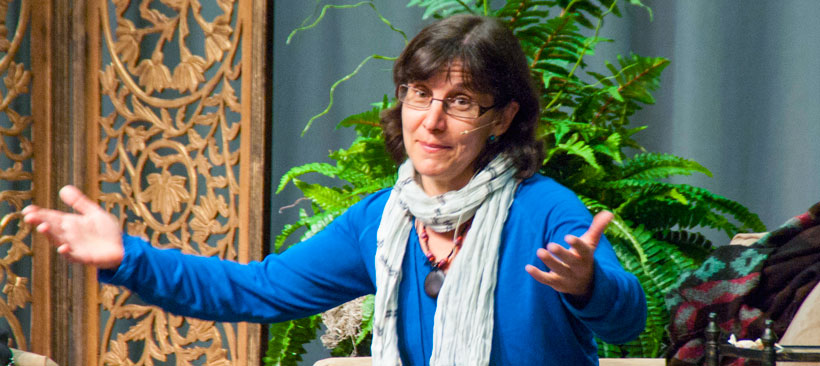
Rosaria Butterfield is the author of Secret Thoughts of an Unlikely Convert and Openness Unhindered. She is a public speaker, pastor’s wife and mother. She earned her Ph.D. in English Literature from Ohio State University, is a former tenured professor of English at Syracuse University, and served in the English Department and Women’s Studies Program there.
In the title of her first book, Rosaria Butterfield describes herself as an ‘unlikely convert’. Her testimony is widely available both in Secret Thoughts of an Unlikely Convert and on many YouTube videos.1 While her conversion included rejecting the lesbian lifestyle she previously saw as a “cleaner and more moral path”, Rosaria is adamant that she was converted not out of homosexuality, but out of unbelief.
A key part of her journey was her friendship with Pastor Ken Smith and his wife Floy. Rosaria says they proved to her they were interested in real friendship. They did not immediately invite her to church or share the Gospel. While that’s a Christian’s first instinct in many situations, she thinks it can make the non-Christian feel like they are nothing more than a new evangelism project to us. While we should certainly share the Gospel, she advises that Christians who want to reach unbelievers can start by just listening.
Reading the Bible
I asked Rosaria how her training as an English professor affected her reading of Scripture.
Yet Scripture was also challenging her assumptions.
Biblical marriage is a creation ordinance
Rosaria emphasizes the need to approach this issue from the standpoint of a biblical view of creation.
Rosaria emphasizes how the idea of male/female marriage is founded in the Genesis account.
The ‘yuck’ factor
Rosaria has spoken out against the ‘yuck’ factor used by many evangelicals.
Engaging in hospitality
Hospitality is a passion for Rosaria, and it is also the topic of her upcoming book.
Standing on a biblical foundation in a hostile culture
Many Christians feel intimidated by the opposition they face in our culture when they take a biblical stand on gender issues. Rosaria said,

How to engage your homosexual neighbour: first steps
Many want to engage people in this area, and share the Gospel with friends and family who identify as homosexual, but they don’t know where to start. Rosaria suggests approaching this subject in a gentle and caring manner.
Monday, 24 October 2016
Jesus and His People Showed Up
I Thought Planned Parenthood Protected Family Values
Rosaria Butterfield
July 21, 2015
I was 11 years old when Roe v. Wade (1973) gave women a constitutional right to abortion. My parents told me a story to help me understand this momentous event.
Here was the content: a member of my family, whom I loved, once used her own knitting needles to abort a baby she knew she couldn’t afford to feed.
Here was the meaning: we were practical, hard-working Italians, and nothing was going to hinder us from achieving the American Dream for each and every family member.
This was a story of heroism. The woman was a matriarch who knew how to take control of her own womb, a loving mother who knew poverty and starvation were far worse than death before birth. This was also a story of a nation. Our country was advancing in its high regard for women, leaving the barbaric days of back-alley abortions and welcoming one where medical care came to the aid of heroic women like my beloved relative.
This was one of the first times I remember history folding into future and holding me solidly in the grip of family values: we were a progressive family, and even our unschooled ancestors showed the grit and goodness of the progressive ideas we knew were best.
My family member was not a feminist. Although long dead, she would not want to be remembered this way. She was a poor woman abused by her husband and trapped by a life with too many children to feed. I was taught that the right to choose came to the aid of all women, but especially poor ones.
For most of my childhood and early adulthood, the name “Planned Parenthood” conjured feelings of safety and security.
Rosaria Butterfield
July 21, 2015
I was 11 years old when Roe v. Wade (1973) gave women a constitutional right to abortion. My parents told me a story to help me understand this momentous event.
Here was the content: a member of my family, whom I loved, once used her own knitting needles to abort a baby she knew she couldn’t afford to feed.
Here was the meaning: we were practical, hard-working Italians, and nothing was going to hinder us from achieving the American Dream for each and every family member.
This was a story of heroism. The woman was a matriarch who knew how to take control of her own womb, a loving mother who knew poverty and starvation were far worse than death before birth. This was also a story of a nation. Our country was advancing in its high regard for women, leaving the barbaric days of back-alley abortions and welcoming one where medical care came to the aid of heroic women like my beloved relative.
Grip of Old Family Values
This was one of the first times I remember history folding into future and holding me solidly in the grip of family values: we were a progressive family, and even our unschooled ancestors showed the grit and goodness of the progressive ideas we knew were best.
My family member was not a feminist. Although long dead, she would not want to be remembered this way. She was a poor woman abused by her husband and trapped by a life with too many children to feed. I was taught that the right to choose came to the aid of all women, but especially poor ones.
For most of my childhood and early adulthood, the name “Planned Parenthood” conjured feelings of safety and security.
Monday, 19 January 2015
Vapour Trails
The Signs of Christ At Work Amongst Us
Some of our readers will be familiar with Rosaria Butterfield. In this video she responds to questions put to her by Russell Moore, one of the prominent theologians and teachers in the Southern Baptist Confederation.
To those who have not yet come across Rosaria, her experience of coming out of militant lesbianism to faith in the risen Christ is salutary and of great moment for the modern Church. There is much to learn. One of the most salutary and encouraging things is how Butterfield responds to questions about her experiences by placing her life within the context of the fundamentals and depths of the Christian faith. This is what being saved by Christ "looks" like. There is also important stuff in this video about what the community of the redeemed must be and become.
Some of our readers will be familiar with Rosaria Butterfield. In this video she responds to questions put to her by Russell Moore, one of the prominent theologians and teachers in the Southern Baptist Confederation.
To those who have not yet come across Rosaria, her experience of coming out of militant lesbianism to faith in the risen Christ is salutary and of great moment for the modern Church. There is much to learn. One of the most salutary and encouraging things is how Butterfield responds to questions about her experiences by placing her life within the context of the fundamentals and depths of the Christian faith. This is what being saved by Christ "looks" like. There is also important stuff in this video about what the community of the redeemed must be and become.
Tuesday, 18 February 2014
Homosexuality is a Sin--Along With Other Things
You Are What—and How—You Read
Rosaria Butterfield12:05 AM CT
Gospel Coalition
I just returned from a well-known (and well-heeled) Christian college, where roughly 100 demonstrators gathered on the chapel steps to protest my address on the grounds that my testimony was dangerous. Later that day, I sat down with these beloved students, to listen, to learn, and to grieve. Homosexuality is a sin, but so is homophobia; the snarled composition of our own sin and the sin of others weighs heavily on us all. I came away from that meeting realizing—again—how decisively our reading practices shape our worldview.
 This may seem a quirky
observation, but I know too well the world these students inhabit. I
recall its contours and crevices, risks and perils, reading lists and
hermeneutical allegiances. You see, I'm culpable. The blood is on my
hands. The world of LGBTQ activism on college campuses is the world that
I helped create. I was unfaltering in fidelity: the umbrella of
equality stretching to embrace my lesbian identity, and the world that
emerged from it held salvific potential. I bet my life on it, and I
lost.
This may seem a quirky
observation, but I know too well the world these students inhabit. I
recall its contours and crevices, risks and perils, reading lists and
hermeneutical allegiances. You see, I'm culpable. The blood is on my
hands. The world of LGBTQ activism on college campuses is the world that
I helped create. I was unfaltering in fidelity: the umbrella of
equality stretching to embrace my lesbian identity, and the world that
emerged from it held salvific potential. I bet my life on it, and I
lost.Friday, 14 February 2014
Douglas Wilson's Letter From Moscow
Blowing Bubbles From the Bottom
The short form is that Rosaria Champagne Butterfield — whose book was fantastic, by the way — was invited to speak at Wheaton College. This, all by itself, was sufficient to set off a small protest festival of marginalization and hurt.
I would draw your attention to the last several paragraphs, where the crucial task of telling the gospel story is transformed into a bizarre form of narratival masturbation. The central human predicament, what Luther called incurvatus in se, is transformed into a narcissistic virtue, resulting in a self-righteous circle jerk, only without the sex.
As for the response of Wheaton as an institution, I believe that someone should tell the authorities there that blowing bubbles from the bottom of the pool is not the same thing as breathing.
And . . .
Tuesday, 19 March 2013
Of Train Wrecks and Car Crashes, Part II
Faith and Haste Are Usually Like Oil and Water
Conversion for the Apostle Paul appears to have been like a fatal car crash. The old was smashed. But out of the wreckage, something new, something wonderful was born. The Scriptures do not give many details, but it seems that some time after Paul's dramatic Damascus road experience, when the shards of his former identity lay scattered on the ground, he retired to obscurity and privacy. It would appear that he needed time to be reconstructed, rebuilt by the Spirit to equip him for the ministry ahead.
Paul tells us that after his initial conversion, he went away into Arabia (a desolate and relatively uninhabited place); then he returned to Damascus and then after three years he "came out", going up to Jerusalem to visit with the apostles. Then, subsequently, he went to Syria and Cilicia (Galatians 1: 11-24) All up, it appears that there was a period of about fifteen years between his initial conversion and before his public call to the work of apostleship.
The breaking of an old identity--particularly one very strongly etched and inscribed--takes time.
Conversion for the Apostle Paul appears to have been like a fatal car crash. The old was smashed. But out of the wreckage, something new, something wonderful was born. The Scriptures do not give many details, but it seems that some time after Paul's dramatic Damascus road experience, when the shards of his former identity lay scattered on the ground, he retired to obscurity and privacy. It would appear that he needed time to be reconstructed, rebuilt by the Spirit to equip him for the ministry ahead.
Paul tells us that after his initial conversion, he went away into Arabia (a desolate and relatively uninhabited place); then he returned to Damascus and then after three years he "came out", going up to Jerusalem to visit with the apostles. Then, subsequently, he went to Syria and Cilicia (Galatians 1: 11-24) All up, it appears that there was a period of about fifteen years between his initial conversion and before his public call to the work of apostleship.
The breaking of an old identity--particularly one very strongly etched and inscribed--takes time.
Thursday, 7 March 2013
Great Books
Book of the Month/March 2013
Engaging the Culture - Book Review
Written by Douglas Wilson
Saturday, 02 March 2013

Gosh, what a book.
I really cannot recommend this book highly enough. This will be a relatively short review -- what I want to do is give a brief summary of the set-up, mention three things about it that were simply wonderful, and then conclude with a plea for you to get it and read it.
Rosaria Champagne Butterfield was an English professor at Syracuse, a postmodern specialist in Queer Theory, and a radical lesbian. In this book she describes her "train wreck" conversion to Christ, and how the Lord has since then led her step by excruciating step to her current high calling as a Reformed pastor's wife, a homeschooling mom, and a foster parent.
Here are the three things I found striking about this book, in no particular order. The first thing is the obvious potency of hospitality and love.
Engaging the Culture - Book Review
Written by Douglas Wilson
Saturday, 02 March 2013
Gosh, what a book.
I really cannot recommend this book highly enough. This will be a relatively short review -- what I want to do is give a brief summary of the set-up, mention three things about it that were simply wonderful, and then conclude with a plea for you to get it and read it.
Rosaria Champagne Butterfield was an English professor at Syracuse, a postmodern specialist in Queer Theory, and a radical lesbian. In this book she describes her "train wreck" conversion to Christ, and how the Lord has since then led her step by excruciating step to her current high calling as a Reformed pastor's wife, a homeschooling mom, and a foster parent.
Here are the three things I found striking about this book, in no particular order. The first thing is the obvious potency of hospitality and love.
Subscribe to:
Posts (Atom)