Showing posts with label Oil. Show all posts

Saturday, 16 March 2019

Growing Rationality in Global Oil

International Energy Agency: U.S. Shale Revolution Transforming Global Oil Markets


Penny Starr
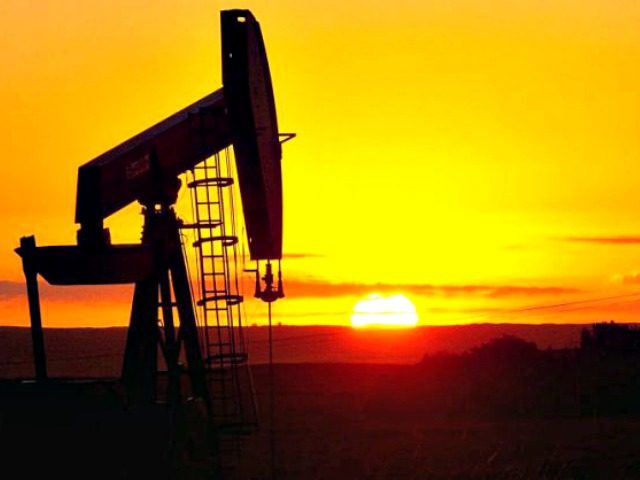
US Shale Production Karen Bleier AFP Getty Images
Karen Bleier/AFP/Getty Images
153

The Paris-based International Energy Agency’s (IEA) “Oil 2019 — Analysis and Forecasts to 2024” report  is out, revealing that the United States’s shale revolution is “triggering a rapid transformation of global oil markets.”

“The story of how the United States transformed itself into a major exporter within less than a decade is unprecedented,” the announcement about the report states. “It is due to the ability of the U.S. shale industry to respond quickly to price signals by ramping up production.”
“The United States accounts for 70 percent of the total increase in global capacity to 2024, adding a total of 4 mb/d (million barrels per day),” the announcement states. “This follows spectacular growth of 2.2 mb/d in 2018.”  The summary of the report states, in part:
As a result of its strong oil production growth, the United States will become a net oil exporter in 2021, as its crude and products exports exceed its imports. Towards the end of forecast, U.S. gross exports will reach nine mb/d, overtaking Russia and catching up on Saudi Arabia. The transformation of the United States into a major exporter is another consequence of its shale revolution.
Greater U.S. exports to global markets strengthen oil security around the world.
“Demand for Oil Increasing for the Foreseeable Future” is the headline for the analysis of upstream investment in the forecast.  “It is, therefore, reassuring that 2019 upstream investment is set to rise for the third straight year, according to preliminary plans announced by key oil and gas companies,” the report summary says.  
The report also notes that while gasoline “slows, petrochemicals and jet fuel are stalwarts of demand growth.”“The second wave of the U.S. shale revolution is coming,” Fatih Birol, IEA’s executive director says of the report.

Saturday, 16 June 2018

Secret Deals in Dirty Back Rooms

Our Lords and Masters

When it comes to killing off New Zealand's oil and gas industry, Prime Minister Ardern has no high ground.  It was a secret decision without consultation.  It was the product of ideological closed minds, cemented in cant.  It was the outcome of a cabal--all extremists, all wanting to prove a point, all filled with self-righteous certainty, all ignorant.
For all the power held by bureaucrats to frustrate decision-making with inconvenient advice or warnings of unintended consequences, sometimes a very small group of people simply decide something will happen, and that is that.

So it turns out to be the case with Prime Minister Jacinda Ardern's decision to end new offshore oil exploration in New Zealand.   Since Ardern led a group of Cabinet colleagues into the Beehive theatrette to announce the move on April 12, there has been mounting speculation about just how little detailed analysis was undertaken behind the move.  It had already become clear that key agencies (Ministry for the Environment and Ministry of Foreign Affairs and Trade) had provided no advice.

Officials at the Ministry of Business, Innovation and Employment had been openly grumbling to the industry that they were being side-lined.  National leader Simon Bridges said he had been told by officials that they were explicitly being asked not to provide advice on the decision (something the Government denies).  But only on Tuesday did New Zealand learn that whatever advice was provided, it ultimately meant nothing.  [Hamish Rutherford, Stuff]
It was a fact-free decision.  Taken in secret.  The balance of data points to greater environmental degradation (if that is what presses your buttons) as a result of not taking oil and gas supplies off the coast of Taranaki, in New Zealand's territorial waters.  Far better to import gas, albeit the embarrassing fact that it does not burn as cleanly as our own, thus further degrading the environment.  Albeit, also, the greater cost of imported oil and gas, to say nothing of the higher environmental degradation as a result of having to ship it to the far off Antipodes.

The dirty-back-room dealers included Ardern herself, Megan Woods (Minister of Energy and Resources), and greenist James Shaw.  There will be other hangers-on, no doubt.

But this is not how Government should be done.  To be clear, while there are many people who remain sceptical, the balance of opinion in New Zealand, including corporate opinion, is that climate change is real and has to be addressed.  The sooner we get on the road to a cleaner economy, the easier the path will be.

In that way, even reasonable opponents of the prime minister's move may respect that this administration and future ones will be forced to make difficult choices.  But process matters and this is a major decision, which could impact New Zealand's energy security in years to come.
What a travesty that such a benign, valuable industry has been killed stone dead by ideological ratbags.  There will be downstream industries and their owners and employees who will be hit hard.  The economic cost to Taranaki will be enormous.

Ardern and the Greens have taken the first steps towards a Luddite future in New Zealand.  They have and will be guilty of doing us all great damage.  We expect that net migration with Australia will turn sharply in Australia's favour as a result.

Let's hope every voter in the Taranaki region punishes our arrogant Masters the next time the ballot boxes are rolled out, and for next ten elections thereafter.  They deserve it.

Saturday, 21 April 2018

Destructive Ignorance

Oil and Gas Exploration Ban is a Mistake

Jonathan Young MP
Stuff

 I'm not disappointed – I'm angry!

A kick in the guts, a wrecking ball for the region, killing the golden goose. All these phrases express the emotional response to the Ardern-Peters Government's announcement to end new offshore oil and gas exploration. Without doubt more bad news is still to come as the Green Party and Greenpeace make onshore exploration their next target.

This decision was made with zero consultation with the petroleum industry and there lies the problem.  The Ardern-Peters' government's announcement to end new offshore oil and gas exploration is a wrecking ball for the Taranakli region, writes New Plymouth MP Jonathan Young.

Not only is it incredibly disrespectful to an industry that has supplied billions of dollars of revenue to the Government and the people of New Zealand, but it has meant that the Government has made a decision regarding the industry with little understanding of how it works.

The opportunity for a positive way forward gets lost in the disruption and destruction of business confidence they have created. The Government may think they have attacked the problem, but unfortunately, they have attacked the solution.

As National's Energy and Resources spokesperson I would support a transfer of knowledge, skills and investment into the greening of the petroleum industry rather than ending it.  Apart from 50 per cent of all oil produced being for environmentally benign purposes, we should continue to pursue the goal of utilising hydrocarbons as feedstock for ultra-low or zero emission fuels.

Research is already underway for this, such as methanol, and hydrogen. There is a tremendous amount of research taking place on improving engine and fuel efficiency. The petroleum sector has some of the smartest people in the country when it comes to understanding carbon and molecules. Utilising their knowledge and skills here and collaborating with other industry-based research is the smart thing to do.

The Ardern-Peters Government has made a significant misstep in their approach.

Thursday, 18 January 2018

A Has-Been Cause

Another Blow to the Palestinians 

Trump Threatens To Cut Off Aid

By cutting off hundreds of millions in American aid to the Palestinian Authority, the president could radically alter the Middle East.

By Victor Davis Hanson
National Review Online

President Trump set off another Twitter firestorm last week when he hinted that he may be considering cutting off hundreds of millions of dollars in annual U.S. aid to the Palestinians. Trump was angered over Palestinian unwillingness to engage in peace talks with Israel after the Trump administration announced the move of the U.S. Embassy in Israel to Jerusalem.

Given that the U.S. channels its Palestinian aid through third-party United Nations organizations, it’s unclear how much money Trump is talking about it. But in total it may exceed $700 million per year, according to reports.

A decade ago, the U.S. row with the Palestinian Authority would have been major news. But not now.  Why?

The entire Middle East has radically changed — and along with it the role and image of the Palestinians.

Wednesday, 12 July 2017

Exemplary Bi-Partisanship

How Politics and Government Are Supposed to Be

New Zealand is a small country with a concomitant population.  It is relatively easy for companies to achieve near monopoly market power.  In the past there have been instances of "big business" being far too cosy with politicians and bureaucrats.  In recent times, less so.  The New Zealand economy is now one of the most open in the world.  Most kiwi businesses are now competing against global or international competitors--on our home ground.  

But the risk remains of oligarchies or duopolies emerging over time.  The oil/gasoline industry is one example.  Market power is concentrated in the hands of just a few large corporates--most with huge multi-national "parents".  It is, therefore, salutary and encouraging to see the Energy and Resources Minister, Judith Collins take an interest in the industry.
Energy and Resources Minister Judith Collins said a report into the retail fuel market had found "features which may not be consistent with a workably competitive market."  The gross profit margin on fuel at the pump had doubled to about 30 cents a litre in Wellington and the South Island over the past four years, the report found.   Higher profit margins in the South Island and Wellington were also "not explained by higher costs in those areas", it found.  [Stuff]
Collins is one tough Minister of the Crown.

Wednesday, 4 May 2016

Letter From America (About Manufactured Crises)

$40 Oil and the Twilight of ‘Scarcity Ideology’

By Robert Bryce
National Review Online

Scarcity ideology pervades modern environmentalism. Indeed, the environmental movement has long relied on the idea that we are running out of, well, everything.

We are running out of food — that claim goes back to 1798, when Thomas Malthus argued that starvation for many people was inevitable because farmers wouldn’t be able to keep up with population growth. In 1968, Paul Ehrlich published The Population Bomb, in which he grimly declared that “the battle to feed all of humanity is over. In the 1970s hundreds of millions of people will starve to death in spite of any crash programs embarked upon now.” Ehrlich’s book was commissioned and published by the Sierra Club. Two million copies were sold. Never mind that today we are feeding twice as many people as we were when Erhlich made his dire prediction and that we are doing so on about the same amount of farmland.

We’ve also heard claims about impending shortages of everything from water to rare earth elements. But no commodity has been the source of more scarcity claims than oil.

And that has led Roger Stern, an energy economist at the University of Tulsa, to coin the term “scarcity ideology.”

Saturday, 17 January 2015

The Greening of the Planet

Cheap Oil, Good Times

Everyone has been agog over the rapid fall in oil prices.  No-one is quite sure when the bottom of the price barrel will be scraped.  Despite the Greenists dire predictions of  looming "peak oil" to hit in 2010, 11, 12, 13, 14 . . . and counting . . . which would have allegedly spelled the end of plentiful oil supplies, leading to rapidly ratcheting oil prices and economic doom, the opposite has happened.  (The Greenists, of course, trumpeted peak oil as an ideological rallying cry to force governments into investing other people's money in "alternative energy".  They were never interested in telling the truth about oil supplies.)

Now the world is awash with cheap oil.  You can draw a bath of the stuff, if you wish, and it will only set you back a nickel.  What is going on?

Friday, 27 December 2013

Drowning in Oil

Peak Oil, Where Art Thou?

The catastrophists have been warning for the past ten years of mankind approaching "peak oil"--that is, the time when oil consumption exceeds supply, leading to a drastic global shortage of energy.  Peak oil was supposed to have occurred around now.  Except . . . .

North America to Drown in Oil as Mexico Ends Monopoly

By Joe Carroll and Bradley Olson  
Dec 17, 2013 6:54 AM
Bloomberg News


The flood of North American crude oil is set to become a deluge as Mexico dismantles a 75-year-old barrier to foreign investment in its oil fields.

Saturday, 23 February 2013

Douglas Wilson's Letter From America

No Bureaucratic Shadow 

Culture and Politics - Politics
Written by Douglas Wilson
Wednesday, 20 February 2013

All the early returns indicate that the available supply of energy in North America is virtually inexhaustible. Using words like inexhaustible is problematic to Malthusians, but it looks to be a good description. Energy, it appears, is about as abundant as salt water. With the discovery of new reserves and the development of new technologies of extraction, it has become apparent that if we had an unregulated energy economy, we could drive back and forth across the country for pocket change on the gallon, and do so without getting permission from a single federal official. And that, at least to them, presents a problem.

Saturday, 12 January 2013

True Commitments

Gore's Green Commitments

The hypocrisy of Al "do-as-I say,-not-as-I-do" Gore has been well documented.  The man whose personal global carbon footprint is bigger than Texas long ago lost all credibility--except amongst the credulous.  Amongst such, Al still has a devoted band of acolytes and callow tyros fighting the good fight for the salvation of mankind. 

Recently Al sold one of his unsuccessful businesses--a TV station.  This failed commercially not because of a lack of ardour and passion amongst those involved, but because there were no government subsidies on offer to make it pay.  Al deserves full blame for this lack of commercial success.  He broke his own rule of successful investing, which is: never invest in anything that does not have a taxpayer subsidy.

Thursday, 10 January 2013

Creation's Abundance

Energy and Ignorant Greenists

We are all familiar with the Greenist propaganda concerning "Peak Oil".  It has been thoughtlessly trotted out as a reason to "invest" in alternative forms of energy: wind, solar, and tidal.  The case betrays the Greenists' ignorance of economics, on the one hand, and their relentless penchant for tax and spend fiscal policies, on the other.

A knowledge of  economic history of energy development shows repeatedly that new energy sources replace current sources long before the current energy source runs out.  As Sheik Yamani of OPEC observed in the 1970's, the steam age ended long before wood and coal ran out; likewise the oil age would end, long before oil ran out.  Yamani has been proved correct.  But the difference between a market led change (diminishing oil supply leads to gradually higher prices making alternative energy source development economical over several decades, providing time to develop a replacement infrastructure to deliver a new energy source in an efficient and lower-cost fashion) and government fiat led is that the latter results in huge market and economic dislocations, false starts and blind alleys, exorbitant waste of tax payers' money, and massive economic costs--which we all have to pay for.  Greenist hubris and folly does not come cheap.

Thursday, 5 July 2012

Drill Baby, Drill

 Rumours of Peak Oil Greatly Exaggerated

Sheik Yamani, former head of OPEC, once famously opined that the steam age did not end due to any shortage of wood, and the coal age did not end due to a shortage of coal.  Likewise, he reckoned, the oil age would eventually end, but not for any lack of oil.

For forty years now, we have been regaled with horror stories of the consequences of oil running out.  We have been told repeatedly that "peak oil" was just around the corner.  In fact, it should be happening now.  After that, oil prices would rise dramatically, due to international shortages leading to severe economic dislocation.  Apocalypse now!  As a result we have been subjected to endless government and crony capitalist waste, fraud, graft and corruption in a useless effort to develop alternative energy sources (solar, wind, ethanol). 

Now it is all being exposed as rubbish.  Stupid, ignorant rubbish.

Wednesday, 18 January 2012

Letter From the UK

O Canada our only hope

By
The Telegraph

I love Canada. I love Canadians. I like very much what their government is doing. I have great faith in their future. And if it weren't for their winters, I'd go and live there like a shot. Weird, huh?

Well it's certainly weird enough for those of us old enough to remember Canada in the Seventies, Eighties and Nineties when it was little more than an embarrassing liberal-lefty joke. Sure we still remembered the suffering and courage of those plucky Canucks from Vimy Ridge to Dieppe to the Low Countries, but that spirit appeared long since to have vanished under the noisome regime of Pierre Trudeau and his grisly communitarian successors. Canada was like a pale imitation of the US with all the worst aspects of European Socialism and political correctness tacked on to it.

But suddenly – sorry South Park – but Canada-is-crap jokes just aren't funny any more because they lack the key ingredient of truth.

Thursday, 12 January 2012

Running on Fumes

It's All Going to End--Not

Part of the catechism of Green Catastrophism is describing the forthcoming horrors of Peak Oil.  You know, the world is running out of oil and the dislocation and suffering that will bring to humanity is unthinkable--so, the governments of the world (through the UN) had better come up with a government led solution to save us all, yah de yah de yah. 

But, we recall the sage words of Sheik Yamani.  He opined that the Coal Age ended not for lack or shortage of coal, and the Oil Age will also eventually end, but not for lack of oil.  The Sheik knew a thing or two about economic development, it would appear.

"Peak Oil" looks a more and more distant risk.  Take this as an example (it's not uncommon):

Tuesday, 5 April 2011

More Swamps Than Christchurch

The Liquifaction of the Left

One of the most destructive carnards concreted into the mind of greenism and environmentalism is the proposition that natural resources are fixed, finite, and limited. Once gone, they are gone forever. Therefore, conservation of said resources is a moral imperative.

Statists warm to this proposition reflexively, that is, without thinking. To conserve on a grand scale requires big government: to regulate, limit, control, restrict, order, prescribe, proscribe, and ban. Without such a big intrusion into the lives and endeavours of citizens, disaster will fall upon the entire race. Therefore, statists join the moral crusade. Advocating for big-brother government suddenly makes one morally good. Saving the planet and saving humanity has a nice moral ring to it, making big government itself a moral imperative.

Socialists likewise find the proposition of limited resources needing to be conserved a convenient doctrine. It justifies pre-emptive property rights of the state over private citizens. It also gives moral cover to advocating for more government taxation and expropriation to fund things like "green industries" and "green energy". You just have to take a glance at President Obama's "new" energy strategy. Instead of "drill, baby drill" it is "spin, baby, spin", referring of course to the windmills he is spending billions of dollars worth of citizen's property to manufacture and deploy.

So, we have the ideological Grand Coalition of our times: greenists, environmentalists, statists, and socialists. Ladies and gentlemen put your hands together for "the Left".

There is one small problem. This monumental intellectual and political construction is built upon a simple fallacy, known as the fallacy of composition. It beggars belief that in a world self-proclaimed to be so smart and so rational that the very same wise-in-their-own-estimation are actually operating with a grand intellectual and political edifice built on more swamps than Christchurch, or more volcanoes than Auckland.

The fallacy of composition assumes or asserts that the attributes of the parts must sum to the attribute of the whole. In this case, since each specific natural resource is clearly finite, natural resources as a whole must, therefore, be finite. Once you explode this childish error, the modern moral edifice for greenism, statism, and socialism is largely exploded, revealing beneath the actual rictal grin of an immoral lust for control and power over the earth and mankind. Babylon redivivus.

So, let's explode the fallacy. It was neatly done by Sheik Yamani of OPEC when he ironically opined that the steam age did not end for lack of wood (a finite natural resource); the coal age did not end for lack of coal; nor will the oil age end for lack of oil. Technological advances made steam and coal redundantly superfluous. The whole is gloriously far more than the sum of the parts in this case.

To change the analogy: imagine a dining room table on which a finite number of apples is placed every evening for the meal. More and more people come to eat every evening so it is obvious that the size of everyone's meal will reduce, assuming everyone gets a turn at the table. Until one evening, the table has not just apples, but oranges on it. Then pears are added. Then . . . you get the point. While each of the foods is finite and limited, by being able to add more types of foods, the supply of food becomes functionally limitless. The attributes of the part are not necessarily the attributes of the whole. Schoolboy error.

At this point the Grand Coalition usually retreats to moral mutterings about the need to be prudent, and careful, and risk-averse. All of those Yamani examples are in the past. We face the future. The planet is at stake. It more prudent to conserve rather than consume, we are gravely told. In fact the opposite is more likely. The more society conserves, under the nannying aegis of the Grand Coalition insisting on what's best for us all, the less likely replacements are to be found through technological innovation, enterprise, creativity, and skills. In other words the Grand Coalition's doctrine of finite resources requiring conservation becomes a self-fulfilling prophecy. The Grand Coalition gets for us all what it has asked for.

Now we know there is currently no shortage of oil in the world. But there is an actual shortage of supply because the Grand Coalition insists upon restricting it. Facing the apples on the table, believing that starvation awaits, the Coalition insists on reducing the number of apples available and putting some into storage (for when the apples run out). The only people benefiting from this nannying prudishness are the apple growers, who find that the price of their apples rises and rises, because they are now in "shorter" supply. "See, we told you that was going to happen," shriek the harridans of the Grand Coalition.

The Wall Street Journal has just provided us with a perfect case study of the myopic, ignorant stupidity of the Left and the great damage they do to mankind. It is a case of technological innovation that looks to make oil increasingly redundant. It is but one illustration of how, when it comes to natural resources, the whole is very definitely far greater than the sum of the parts.

In the early 1980s, George P. Mitchell, a Houston-based independent energy producer, could see that his company was going to run out of natural gas. Almost three decades later, the results of his effort to do something about the problem are transforming America's energy prospects and the calculations of analysts around the world.

Back in those years, Mr. Mitchell's company was contracted to deliver a substantial amount of natural gas from Texas to feed a pipeline serving Chicago. But the reserves on which he depended were running down, and it was not at all clear where he could find more gas to replace the depleting supply. Mr. Mitchell had a strong hunch, however, piqued by a geology report that he had read recently.

Perhaps the natural gas that was locked into shale—a dense sedimentary rock—could be freed and made to flow. He was prepared to back up his hunch with investment. The laboratory for his experiment was a sprawling geologic formation called the Barnett Shale around Dallas and Fort Worth. Almost everyone with whom he worked was skeptical, including his own geologists and engineers. "You're wasting your money," they told him over the years. But Mr. Mitchell kept at it.

The payoff came a decade and a half later, at the end of the 1990s. Using a specialized version of a technique called hydraulic fracturing (now widely known as "fracking" or "fracing"), his team found an economical way to create or expand fractures in the rock and to get the trapped gas to flow. . . .

As late as 2000, shale gas was just 1% of American natural-gas supplies. Today, it is about 25% and could rise to 50% within two decades. Estimates of the entire natural-gas resource base, taking shale gas into account, are now as high as 2,500 trillion cubic feet, with a further 500 trillion cubic feet in Canada. That amounts to a more than 100-year supply of natural gas, which is used for everything from home heating and cooking to electric generation, industrial processes and petrochemical feedstocks. . . .

In the energy industry, use of the new technology quickly gathered speed. The know-how was applied across North America, in such shale formations as Haynesville, mostly in Louisiana; Eagle Ford in South Texas; Woodford in Oklahoma; Horn River and Montney in British Columbia; Duvernay in Alberta; and the "mighty Marcellus," the huge formation that spreads from Pennsylvania and New York down into West Virginia.

Gas output rose dramatically, and the anticipated shortfall turned into a large surplus. As the volume rose, the inevitable happened—prices came down. Substantially. Today, natural-gas prices are less than half of what they were just three years ago.

Suddenly there are not just apples on the table, but now oranges. This pattern has been repeated for centuries. The only impediment is the wowsers of the Grand Coalition, who believe they know what is best for us all. Bless their little cotton socks.

When Christians realise the entire edifice of the Grand Coalition rests upon a basic schoolboy error in inductive reasoning the more distasteful the niggardly faux morality of the Grand Coalition becomes. Moreover, as Christians come to understand and believe in the superabundant generosity of the Living God manifested in the reckless, prodigal, super-abundance of His creation for our exploitation and enjoyment, the insult to the injury becomes detestable.

Thursday, 5 August 2010

Where has all the Oil Gone?

Histrionic Alarmism: Who will Rid us of These Pestiferous Fools?

It's now mainstream. Time Magazine has run a piece on the Gulf oil spill by Michael Grunwald that presents the case for it being a storm in a teacup. The real disaster has been the Federal Government's handling of it and the economic damage it has caused as a result of suspending deep sea drilling. But as they say in the trade, never let the facts get in the way of a good story.
The Deepwater Horizon explosion was an awful tragedy for the 11 workers who died on the rig, and it's no leak; it's the biggest oil spill in U.S. history. It's also inflicting serious economic and psychological damage on coastal communities that depend on tourism, fishing and drilling. But so far — while it's important to acknowledge that the long-term potential danger is simply unknowable for an underwater event that took place just three months ago — it does not seem to be inflicting severe environmental damage. "The impacts have been much, much less than everyone feared," says geochemist Jacqueline Michel, a federal contractor who is coordinating shoreline assessments in Louisiana.

Yes, the spill killed birds — but so far, less than 1% of the number killed by the Exxon Valdez spill in Alaska 21 years ago. Yes, we've heard horror stories about oiled dolphins — but so far, wildlife-response teams have collected only three visibly oiled carcasses of mammals. Yes, the spill prompted harsh restrictions on fishing and shrimping, but so far, the region's fish and shrimp have tested clean, and the restrictions are gradually being lifted. And yes, scientists have warned that the oil could accelerate the destruction of Louisiana's disintegrating coastal marshes — a real slow-motion ecological calamity — but so far, assessment teams have found only about 350 acres of oiled marshes, when Louisiana was already losing about 15,000 acres of wetlands every year. . . .

Marine scientist Ivor van Heerden, another former LSU prof, who's working for a spill-response contractor, says, "There's just no data to suggest this is an environmental disaster. I have no interest in making BP look good — I think they lied about the size of the spill — but we're not seeing catastrophic impacts." Van Heerden, like just about everyone else working in the Gulf these days, is being paid from BP's spill-response funds. "There's a lot of hype, but no evidence to justify it."

The scientists I spoke with cite four basic reasons the initial eco-fears seem overblown. First, the Deepwater oil, unlike the black glop from the Valdez, is unusually light and degradable, which is why the slick in the Gulf is dissolving surprisingly rapidly now that the gusher has been capped. Second, the Gulf of Mexico, unlike Alaska's Prince William Sound, is very warm, which has helped bacteria break down the oil. Third, heavy flows of Mississippi River water have helped keep the oil away from the coast, where it can do much more damage. And finally, Mother Nature can be incredibly resilient. Van Heerden's assessment team showed me around Casse-tete Island in Timbalier Bay, where new shoots of Spartina grasses were sprouting in oiled marshes and new leaves were growing on the first black mangroves I've ever seen that were actually black. "It comes back fast, doesn't it?" van Heerden said.

Grunwald's conclusion:

Anti-oil politicians, anti-Obama politicians and underfunded green groups all have obvious incentives to accentuate the negative in the Gulf. So do the media, because disasters drive ratings and sell magazines; those oil-soaked pelicans you saw on TV (and the cover of TIME) were a lot more compelling than the healthy ones I saw roosting on a protective boom in Bay Jimmy. Even Limbaugh, when he wasn't downplaying the spill, outrageously hyped it as "Obama's Katrina." But honest scientists don't do that, even when they work for Audubon.

"There are a lot of alarmists in the bird world," Kemp says. "People see oiled pelicans and they go crazy. But this has been a disaster for people, not biota."

Tuesday, 9 February 2010

You've Got to Do Somthing

Praying to the Idol

Oh, no! Another calamity is coming. Climate change is now passe, deja vu. People have got over all the tingly feelings of apprehension and dread. Copenhagen was a blast, but the sceptics are now running the show. The party's over.

But, on cue Richard Branson and fellow concerned citizens have discovered another apocalyptic threat. Peak oil. The good old Guardian's headline gets the terror tingles going again: Branson warns that oil crunch is coming within five years.

Chief prophet Branson really gets our attention when he says that it is going to be worse than the credit crunch. And like all card carrying prophets, he then turns to the West's god and intercedes earnestly for its help.
Sir Richard Branson and fellow leading businessmen will warn ministers this week that the world is running out of oil and faces an oil crunch within five years. . . .

"The next five years will see us face another crunch – the oil crunch. This time, we do have the chance to prepare. The challenge is to use that time well," Branson will say.

"Our message to government and businesses is clear: act," he says in a foreword to a new report on the crisis. "Don't let the oil crunch catch us out in the way that the credit crunch did."
Oh, goody. The gummint will save us. The prophet has prayed to the ministers of the idol. "Most glorious gummint--in the past when we have called upon you for help in our troubles, you have heard and answered. You have always delivered us from our desperate needs. Dearest lord, you have passed laws, made regulations, taxed, bestowed grants. You have always saved us. Now, we need your mercy again. Peak oil will overwhelm us. A short five years and it will be upon us. Oh, lord hear! Oh, lord, act! We beseech you, do not delay. Deliver us from our darkest enemies."

Those enemies are devious blasphemers: they serve another god. They conspire to hide the threat until it is too late.They are breeding an army in their caverns--and army which has but one purpose--to destroy our way of life.
Their call for urgent government action comes amid a wider debate on the issue and follows allegations by insiders at the International Energy Agency that the organisation had deliberately underplayed the threat of so-called "peak oil" to avoid panic on the stock markets.

Ministers have until now refused to take predictions of oil droughts seriously, preferring to side with oil companies such as BP and ExxonMobil and crude producers such as the Saudis, who insist there is nothing to worry about.
What on earth is "peak oil"? It is an artificially manufactured crisis. But it has its uses. It shows once again that the West has become a worshipper of governments while its peoples live in profound, self-willed ignorance. Ah, oil. The rumours of your death are greatly exaggerated, but they give us the willies, and we like that. And fears of your death give us a reason to evoke our god with passion, urgency, and great pride. We like that too.

The canard of peak oil compares daily world consumption with known oil reserves. Sooner or later the oil is all going to be used up. As that happens the price of oil will explode, leading to economic dislocations fearful to contemplate. Act, oh government. Act now. Save us.

The direction of the price of oil is a very useful thing. It tells us whether demand for oil is exceeding supply, or the reverse. But peak oil theories bring in another assumption: a freeze frame view, which declares that the amount of energy in the world is known, fixed, finite--and it is what we know now. So, according to this pagan world-view when the price of oil is rising, it tells us that its supply, which is fixed, is coming to an end.

Peak oil doomsaying is not new. Consider the following:
We don't just figure out how to use resources more efficiently. We discover, and create, fundamentlly different types of resources. A every stage, some doomster can do a little math and predict that the current resource will soon be depleted. And he will almost be right. In fact, people in every era of recorded history have worried about running out of whatever resource they're using at the time. England began to experience lumber shortages in the 1600's. They got so severe that in the 1700's that the island came close to being stripped of its forests. People feared a complete loss of wood. So what happened? Wood became too costly to use as fuel in most places. That encouraged innovation with other resources like coal. The English eventually switched to coal, and over time, English forests returned.

The process was hardly inevitable. It involved all manner of effort and ingenuity, usually brought on by rising scarcity, which led to rising prices. Because of the role of prices, scarcity and crativity conspire to get us to the next level, to the next resource, or the next technological breakthrough. . . .

So, after the switch to coal, did all of England rest easy and quit worrying about running out of resources? Hardly. In 1865, a prominent social scientist named W. Stanley Jevons wrote a book proving to his satisfaction that England would soon exhaust its coal, and the economy would grind to a halt. It didn't happen, and there's still plenty of coal available more than 140 years later. [Jay W. Richards, Money, Greed and God, (New York: HarperOne, 2009), p.190]
Richard Branson is channelling the ghost of W. Stanley Jevons. He will go the way of Jevons, being consigned to the dustbin of history, nothing more than an eccentric curio. Sadly, however, it is likely that his government god will endure for the foreseeable future and continue to do great damage,being dumb enough to respond to the intercessions of eccentric prophets like Branson.

Peak oil is a pseudo-threat, unless government "acts" in response to the wailings of chicken littles and makes it real. As Sheik Yamani astutely observed, "The Stone Age came to an end not for a lack of stones, and the oil age will end, but not for a lack of oil."

And there is an additional, very important consideration. "Peak oil" dreads are always based upon known oil reserves. Peak oil is never based upon how much oil actually exists in the world. No-one knows how much oil actually exists. It is costly to find that out--very, very costly. As Thomas Sowell astutely observed, "How much of any given natural resource is know to exist depends on how much is costs to know." (Richards, p. 187) Crudely put, if the price of oil were to rise, we would soon discover more of it.

Long before oil is exhausted, superior sources of energy will have been exploited to take its place. The last thing we need is for governments to "act". But as the proverb says, never get between a fool and his folly; it would be better to hug a bear robbed of its cubs.


Friday, 25 July 2008

Tea Leaves and Belgian Dentists

Has the Reserve Bank Got it Right? Or, Should it Matter?

There has been a lot of debate recently over whether the Reserve Bank has done the “right thing” by starting to loosen monetary policy. We at Contra Celsum do not make it our business to prognosticate on near or immediate outcomes. It is far too difficult for mere, fallible humans to do credibly. It is even more difficult to benefit fiscally from such speculations. When a near term prediction is credible and widely believed it will be already priced in markets—so that, perversely, by the time conviction arrives, it is too late. The price horse has bolted, as it were.

When predictions of near term outcomes are uncertain, the risks are even greater. To invest or divest capital on the basis of such fantasies or speculations is folly indeed. Yet thankfully many do, which usually leads to the wonderful phenomenon of artificially and speculatively inflated or depressed capital markets—which, in turn, usually offers wonderful investing or divesting opportunities for a careful allocator of capital.

Whether the Reserve Bank was “right” in loosening monetary policy in New Zealand this week is a very difficult call. So prudence would suggest that we pass and consign it to the realm of speculation on a near term outcome.

What is more useful, however, is to consider some longer term economic fundamentals—factors which are usually overlooked in the frenzy of near term speculation, but which will inevitably “play out” in the longer term. Here, then, are some longer term fundamentals which we believe the sagacious need to keep in mind—in no particular order.

Economic growth occurs when capital and labour are both deployed to produce desirable goods and services of such quality and price to attract buyers. New Zealand is a small economy. It is an open economy. It can only sustain economic growth over the long term if it succeeds in producing goods and services which are more attractive in either quality or price, or both, than what other peoples and nations can produce. Thus, the key to economic growth is a competitive tradeable sector (that is, goods and services that are either exported or can be used efficiently to substitute imports, such as oil.)

New Zealand has few tradeable sectors which are sufficiently productive to cut the mustard in a global market. Agriculture is one (dairying in particular). Owing to the application of knowledge, research, and technology the productivity of the agriculture sector has steadily increased over the past thirty years, once the artificial subsidies of the Muldoon era had been removed.

The economic lifeblood of the nation is wedded to businesses that can trade effectively with the world, which means exporting to selling to domestic consumers who may also buy competitor imported goods on a cost-effective basis. There are two longer term critical impediments to doing this. Firstly, our labour productivity is falling. That is, less is being produced for every hour worked. Wages, however, are rising—therefore labour costs are going up, while productivity is going down. This means that in general New Zealand is economically terminal. Secondly, our cost of capital is high. This is due to its scarcity. We do not save enough: therefore, we rely on international savers to lend to, or take equity in, our businesses. They require a higher premium, a higher return, for investing in New Zealand because the risks are higher.

Given our higher costs of capital, and the falling productivity of our labour force, the longer term outlook for the New Zealand economy is not good. Things will have to change for the longer term outlook to become more positive—and change is likely to mean lower standards of living and some considerable economic pain.

Inflation is a hydra with many faces. Inflation is not caused by rising prices, per se. Inflation is caused by an increase in the supply of money. Prices can rise and fall due to imbalances of supply and demand. This is not inflationary. Thus, to the extent that prices have risen due to inadequate supplies of oil to meet increasing global demand, it reflects a non-inflationary market effect. It is highly unlikely that such market driven price increases will flow through to self-reinforcing general price and wage spirals without a commensurate increase in the supply of money (regardless of whether the increase comes from the actions of the Reserve Bank or from overseas investors.) Choke off the supply of money and an inflationary spiral is far less likely.

A small open economy will always be subject to occasional global economic shocks. It is not the shocks that are critical, for they are inevitable and unavoidable—it is the speed and efficiency with which the productive sector of the economy can adapt that is vital. The greatest impediment to a speedy adjustment is the government sector, both with its artificial propping up of the economy through distributive spending, and with its endlessly complex spaghetti of rules and regulations. New Zealand's government sector has grown substantially relative to the size of the economy over the past nine years. The ability of the economy to adjust to the current global credit crunch and oil shock has been commensurately weakened. This suggests that the pain will go on for longer. If the government introduces a carbon trading tax, it will go on for much longer.

A country that runs a large current account deficit can ordinarily expect that its currency will devalue over time. This, in turn, allows the tradeable sector to price itself more competitively. On the other hand, when an economy is competing effectively in the tradeable sector, over time one would expect that the currency would appreciate, forcing greater efficiencies—a virtuous circle.

New Zealand's currency has been propped up for a long time by our relatively high interest rates. Japanese housewives and Belgian dentists have lent money to New Zealand banks because the interest rates were so much higher than they could earn at home. This has made the New Zealand currency attractive. With such strong buying support, the dollar has remained high, creating a huge headwind for the tradeable sector.

Unfortunately, most of the investment in New Zealand by Japanese housewives and Belgian dentists has flowed through to the non tradeable sector—namely, housing. So, we have been subjected to a debt fueled lifestyle-consumption extravaganza. It has created a false sense of wealth. It has created a dual economy: one which has a productive, tradeable sector struggling in the face of significant impediments, and a consumption sector turbo-charging its appetites with easy credit. Government hand-outs have abetted the chimera of prosperity and given its speculation greater impetus.

This artificially propped up currency has to fall if the economy is to have any hope of righting itself. It would possibly be best if it were left to fall drastically and quickly. This would lessen the chances of creating a wage and price spiral as a result of gradually increasing import prices, due to a gradually falling currency. But fall it must—eventually.

In the light of the above, prudent investment of capital becomes a simple matter, although not easy. Firstly, there are businesses in New Zealand operating in the tradeable sector which have made a reasonable fist of growing their earnings, despite the huge headwinds of the past five years. As the currency falls, they are only going to do better.

Secondly, in tough economic times, the best companies get better still. They tend to increase market share as their competitors fade away. Consequently, it is a wonderful time to be a capital allocator, provided you can read a balance sheet and an earnings statement with a modicum of intelligence, and provided you have a reasonable dash of common sense, and your investing time frame is at least ten years. However, without those attributes, don't even think about it. Every time you get tempted to speculate (for that is what you will be doing) imagine Dirty Harry aiming his 44 magnum at your eyeballs, and growling, “I know what you are thinking, punk.”

Many of the things we have discussed will not play out tomorrow, or the next day, or the next year. Maybe not in the next five years. But, play out they will. The New Zealand economy is a huge leaky home. In the end, the rot will show through.

In the meantime, there is no better course as a capital allocator than to buy high quality assets at attractive prices, then take a ten year holiday.

Tuesday, 15 July 2008

If You Can't Beat Them . . .

The Open Society and a New Enemy

In a recent article on the Energy Bulletin website (June 29, 2008), Kurt Cobb, who is a founding member of the Association for the Study of Peak Oil and Gas, argues for restrictions upon free speech with respect to climate change.

This is not new. It has been part of the sinister underbelly of the movement for some time. Every so often the covering is removed for all to see.

Towards the end of World War Two, Karl Popper wrote the now famous The Open Society and Its Enemies. Popper argued very successfully, against the backdrop of the closed societies of Soviet Russia and Nazi Germany, that a pre-requisite for progress was maintaining an open society where there was a tolerance of the free exchange of ideas scholarship and research. Cobb and his ilk are calling for the Open Society to be closed to climate change skeptics. The rights of free speech should be removed from anti global warming advocates.

What exigency would require such a lurch into a closed, controlled, totalitarian society?


Let us consider carefully Cobb's two reasons for this extreme suggestion.

1. The dire magnitude of the threat requires that basic freedoms be relinquished. This argument is familiar to us all. In a time of war, when our very existence is threatened, it is common for a nation to move to a “war footing” which usually results in greatly expanded state powers, on the one hand, and greatly diminished personal freedoms, on the other. We all understand this, and most find the argument compelling.

However, as we look around we don't see a state of war. It does not appear as though we are living under dire threats. Cobb and his ilk argue in return that this is the very point. The threat exists, it is real—but it won't show up for another fifty years or so. There is so much carbon in the atmosphere right now that these consequences are inevitable; so we must take urgent action now. It is comparable to a situation where we know that a submarine has launched a polaris nuclear missile, but it is just going to take several decades to arrive. So we ought to go to a war footing now—with its attendant restrictions on personal freedoms. All criticism of global warming must be silenced because it is equivalent to traitorous talk in a time of war. Just as we jailed conscientious objectors during the world wars, we should silence global warming critics now.

The problem with this argument is its question begging. It is a fallacy. It assumes what has to be proven. It is precisely the existence of the danger, the proximity of the peril, and the reality of the threat that is at issue. Critics don't believe, or are not convinced, the polaris missile is airborne, or even that there are hostile submarines out there. Until global warming acolytes can engage rationally with the objections and the criticisms, and prove them wrong, suppressing the critics amounts to no more than substituting force for reason. Might is attempting to make right.

Now, we don't question the depth or fervency of Cobb's belief in anthropogenic global warming. We just believe him to be in error. He and his colleagues have far more work to do.

A variant of the “dire threat” argument is the pragamatic overlay: it is better to be safe than sorry. The argument runs that even if global warming is not correct, it will do no harm to combat carbon emissions in the meantime. We will not have lost anything.

Really? Try telling that to the starving millions who cannot afford to buy food any more, courtesy of the bio-fuel mania—explicitly whipped up to combat global warming. Sure the UN has now declared bio-fuels have turned out to be a crime against humanity, but it is a little too late.

It turns out that working to prevent “so called” presumed damage in the future brings terrible hardships, deprivations, and suffering now. It does a great deal of harm. Wisdom says we had better be sure we are right, before we inflict that price upon ourselves—particularly because the price will be disproportionately born by the poor, the weak, and the vulnerable in the world—the people that Franz Fanon called the Wretched of the Earth.

2. Public debate is being muddied because oil companies have huge financial resources with which to promote their case in the media and to the public. By implication environmentalists don't have has much money so in this issue the state of free speech is an uneven, unfair playing ground. He who talks the most wins the debate.

Again, there is a certain force to this argument. We have all observed arguments where one protagonist has shouted the other down, has not let him get a word in edgewise, and effectively has won by silencing his opponent.

But is this really the case? When we observe such a situation, do we not resent the shouter and disrespect his arguments? Do we not have sympathy for the person whose views are silenced? Does it not make people more determined than ever to hear the other side? Often that is precisely the effect.

Secondly, oil companies can have no apparent vested interest in fossil fuels per se over the longer term. They are essentially energy “manufacturing” and distribution companies. One would have thought it was deeply within the vested interests of oil companies to promote all sorts of fears about global warming. Who stands to benefit from the bio-fuel mania? Oil companies. As soon as it becomes industrialised and in the supply chain, the oil companies will take a position and make money from it.

It is likely that oil companies will morph into energy conglomerates and will make lots of profit from global warming fears. After all, the major oil companies have been researching alternatives to fossil fuels for decades. So it is not immediately evident why all their vast resources will be put to silencing the siren calls, or to queering the debate. In fact, if anything the widespread phobia over global warming could well be due in part to oil companies stirring the pot along.

We would humbly suggest that every major oil conglomerate in the world right now is carefully positioning itself to maximise its profit from energy measures and policies arising out of efforts to oppose global warming. They will make heaps off the government subsidies, the rules and regulations—because in the end the world needs energy, and it needs capital to develop tools to harness it—and the major oil companies will be right up there.

Finally, is Cobb's capitalist conspiracy theory credible when you consider that all the mainstream media appear to froth at the mouth to publish stories about global warming? Every significant climate event is causally connected with global warming. Once again, like the oil companies, it helps them make profits. Sensational dangers grab attention and increase news consumers—leading to higher advertising revenues. The content of the mainstream media has favoured the cause of global warmingism many many time over.

In 2007, news clippings services recorded that James Hansen, Al Gore's resident global warming expert, was quoted over nine thousand times. No sceptic even came close.

What we desperately need is more, not less debate. The dangers of trying to shut your opponent up by force are just too great. You usually try and do that when you sense your argument is weak and deeply flawed. Or you are frustrated. Or both.

Friday, 30 May 2008

Peak Oil on Artificial Steriods

Bubble, Bubble, Oil and Trouble

The prospective price of oil has been a hot topic in recent weeks. It is the kind of issue which fascinates us at Contra Celsum because it has so many facets. We posted recently that the West has recently taken on the role that OPEC played in the great oil shocks of 1973 and 1974—albeit for different, although connected, reasons. Both OPEC then, and the West now, see themselves as being under real and substantial threats. Both acted (and are acting) to restrict the supply of oil.

In the seventies, OPEC felt that it was being exploited by Western oil consuming nations. So Arab nations (predominantly) formed a cartel, restrained output, and forced the world oil price up. The impact was felt all around the world. It resulted a decade of stagflation in the US and Europe (and other western economies, such as New Zealand). Stagflation is a macro-economic condition of rising prices (inflation) coupled with stagnant or no economic growth.

Stagflation leads to rampant inflation. Universal rising prices are tolerable (although not healthy) where productivity and economic growth is matching or outstripping price rises. Where prices are rising, but economic growth is static or contracting, however, as is the case under stagflation, in the end inflation becomes rampant. That is, economic actors (producers and consumers) engage in adaptive behaviour and adjust their production and consumption decisions to the expectation that costs and prices are going to rise.

On the expectation that prices will continue rising they markedly increase their debt levels (borrow now, and pay back later with cheaper, inflated dollars) thereby pushing up interest rates. They hoard real assets on the expectation that they will match rising prices (gold, silver, real estate, hard commodities) driving up hard asset prices still further. Manufacturers build in greater margins on the expectation that the next lot of raw materials will cost more, thereby pushing up prices still further. Employees, demand and get higher wages, without any increase in productivity or more effort. Rising labour costs result in yet another universal price rise. So the spiral goes viciously upward.

Well, we hear you say, so what? As long as everything keeps adjusting upwards the party can go on for a long time. Not if you are on a fixed income, or have no hard assets, or are renting. For such people, who are usually the most vulnerable in our society, stagflation and rampant inflation is devastating and results in impoverishment. Moreover, inflation means that more and more paper money is in circulation in the economy. To cope with rising prices and economic pain, credit restrictions are eased. But the transmission of the money supply is never uniform. There will always be those who are closest to the money spiggots; they always benefit, but at the expense of those who are furtherest away. Monetary based inflation is theft, pure and simple.

To break stagflation and burn it away required the harsh monetarist medicine of the eighties, with the inevitable accompanying recessions.

There have been plenty of people raising the stagflation spectre in recent weeks. But it takes more than the rise in the price of a commodity to create conditions of stagflation. Rising oil prices are a necessary, but not sufficient condition. The world is now far more of an open global economy than the seventies and while it is possible that stagflation will eventuate, it is not likely. Nevertheless, were trade barriers to be erected once again, were free trade agreements and treaties to break down, were wage and price controls begin to emerge, and were widespread government deficit spending to re-occur, all bets would and truly be off. But we are not there yet—not by a long way.

Meanwhile, will the price of oil come down again? Courtesy of the Hive, we read that a senior economist for Export Development Canada is arguing that the price will drop in the second half of this year back down to around US$80 per barrel. Reason: slowing economic growth will reduce world-wide demand for oil. And George Soros is quoted in another article, also courtesy of the Hive, arguing that the oil price will drop, but his reason is different. He reckons price is now the result of a speculative bubble which will burst. So, which is it to be? Slowing economic growth or the bursting of a speculative bubble? If both are right, the price may drop back to US$40 or US$50 per barrel.

Not so fast. Courtesy of Adam Smith of the Inquiring Mind we have been linked to a very thoughtful piece in the Wall Street Journal. It argues, based on research work being done by the International Energy Agency (IEA), that supplies of oil are going to be far tighter than previously thought. In fact, we are already at conditions of “peak oil”.

The methodology of the IEA until recently has been to forecast world demand for oil, and it has simply assumed that production would rise gently and gradually to meet demand. Now, however, the IEA is looking at supply, and concluding that aging oil fields and diminished investment mean that it is unlikely that world supply will keep up with demand.

But this occurrence of “peak oil” is an artificial creation. There are plenty more supplies of oil in the world. As one analyst put it, the difficulties in oil supply are not buried in oil fields—they are above ground. They are social and political. In the West they are largely the result of greenist ideology.

To be sure, the greenists do not mind that peak oil is being artificially created. They would be quite happy to see not one more drop of oil consumed—for this, they believe, would combat global warming. They are very pleased to see the price of oil so high, and wish that it were higher. They will probably be gratified in the months ahead, unless our Canadian economist and George Soros are correct.

In their zealotry, hard core greenists are happy to see everyone poorer. They write off as mere “collateral damage” the degradation, starvation, and death of millions in the poorest countries in the mad drive to manufacture ecology-destroying biofuels. Like all good utopians, rationalists, and ideologues, the end really does justify the means.

What of the reality, however? Laying aside the lunatic fringe, will greenism triumph? Not when it starts to hurt. All the soft-core greenists, the fellow travelers and the politicians who represent them, are likely to desert the cause pretty quickly. The most likely immediate response to high oil prices: reduced taxes on gasoline. We are bold enough to predict that in the forthcoming election campaign in New Zealand, one of both major political parties will move to reduce the price of petrol at the pump by reducing state petrol taxes. France's Sarkosy has already made such a call—yesterday, in fact. Gordon Brown has proclaimed that high oil prices are his current apocalypse du jour. (Last week it was global starvation as a result of biofuels. Poor Gordon is finding that all the pet leftist causes are creating global crises which he is now left to deal with. Old Blony Tair. You have to give the man credit. He has to be the ultimate exponent of the hospital pass.)

Secondly, expect that when rising oil prices are seen as a threat to national security, the US congress will move rapidly to open up some of its vast oil reserves in Alaska and the western states to exploration and development. Greenism will quickly be seen as a nice-to-have, but only when you are sitting in your warm living room, with lots of affordable groceries in the kitchen. But it will take time to bring the oil onstream.

Thirdly, expect the major developing countries in the Third World, which have never bought into greenist ideology, to move quickly and effectively to assist in exploration and development, in exchange for favourable supply contracts, in the poorer third world. We continue to expect that within ten years the crisis will have passed.

“Peak oil” will seem like a distant memory, a time of temporary madness. What is an open question is whether greenism will have been thoroughly discredited and completely repudiated in the process.

Unlikely, for as Freeman Dyson recently argued environmentalism has now replaced socialism as the established secular religion. High priests and zealous acolytes do not relinquish religious beliefs so easily.