Tuesday, 30 July 2013

Calvin's Daily Devotional

Daily Devotional

July 30

Thine Is My Heart: Devotional Readings from the Writings of John Calvin

by John Calvin (compiled by John H. Kromminga)
Republished from the OPC Website

Bible Text:
Then came the word of the Lord to Isaiah, saying, —Isaiah 38:4, 5


Devotional:
"Then came the word of Jehovah." What interval of time elapsed between the Prophet's departure and return we know not, but it is certain that the glad tidings of life were not brought until, after long and severe struggles, he perceived that he was utterly ruined; for it was a severe trial of faith that he should be kept plunged in darkness by the hiding of God's face.

We have said that, while the doctrine of consolation was taken away, still the faith of the good king was not extinguished so as not to emit some sparks, because, by the secret influence of the Spirit, "groans that could not be uttered" (Rom. 8:26) arose to God out of the gulf of sorrow.

Hence also we conclude that, while "in the day of trouble" (Psalm 50:15) God heareth believers, yet the favor of God does not all at once shine on them, but is purposely delayed till they are sincerely humbled.
And if a king so eminent in piety needed almost to suffer anguish, that he might be more powerfully excited to seek the favor of God, and, being almost wasted by grief, might groan from hell to God; let us not wonder if he sometimes permits us for a time to be agitated by fears and perplexities, and delays longer to bestow consolation in answer to our prayers. —Commentaries


John Calvin was the premier theologian of the Reformation, but also a pious and godly Christian pastor who endeavored throughout his life to point men and women to Christ. We are grateful to Reformation Heritage Books for permission to use John Calvin's Thine Is My Heart as our daily devotional for 2013 on the OPC Web site. You can currently obtain a printed copy of that book from Reformation Heritage Books.

Militant Idolatry

Putting to the Question

There is ordinary idolatry, and then there is militant idolatry.  Ordinary, garden variety idolatry is everywhere.  People conceive of a deity and give it their loyalty and devotion and obeisance.  But militant idolatry is a step up the scale.  Militant idolatry is where a devotee says, "My god must meet certain requirements that are important to me, or I will not worship him."  Either the idol first bows down to me, or I will not bow down to it.

Militant idolatry exposes the essence of all idolatry--which is self-worship.

Former archbishop Desmond Tutu has just come out of the closet, exposing himself to be a militant idolater.  Sad really, but there it is.  Out of the abundance of the heart, the mouth speaks.  And Desmond has spoken.

Monday, 29 July 2013

Voice From the Grave

Tolkien In His Own Words

Justin Taylor has kindly put together a collection of interviews and interactions with J R R Tolkien--all open source.

The collection entails:
First broadcast on BBC 2 on March 30, 1968: “John Izzard meets with JRR Tolkien at his home, walking with him through the Oxford locations that he loves while hearing the author’s own views about his wildly successful high-fantasy novels. Tolkien shares his love of nature and beer and his admiration for ‘trenchermen’ in this genial and affectionate programme. The brief interviews with Oxford students that are dotted throughout reveal the full range of opinions elicited by ‘The Lord of the Rings’, from wild enthusiasm to mild contempt”:
The protestations and pseudo-critiques from self-styled Marxist students are hilariously hide-bound.  Tolkien's quotation of Simone de Beauvoir on death at the end is strikingly memorable. 

Then follows:

Calvin's Daily Devotional

Daily Devotional

July 29

Thine Is My Heart: Devotional Readings from the Writings of John Calvin

by John Calvin (compiled by John H. Kromminga)
Republished from the OPC website.

Bible Text:
Owe no man any thing, but to love one another: for he that loveth another hath fulfilled the law. —Romans 13:8

Devotional:
The third use of the law, which is the principal one, and which is more nearly connected with the proper end of it, relates to the faithful, in whose hearts the Spirit of God already lives and reigns. For although the law is inscribed and engraven on their hearts by the finger of God—that is, although they are so excited and animated in the direction of the Spirit that they desire to obey God—yet they derive a twofold advantage from the law.

For they find it an excellent instrument to give them, from day to day, a better and more certain understanding of the Divine will to which they aspire, and to confirm them in the knowledge of it. As, though a servant be already influenced by the strongest desire of gaining the approbation of his master, yet it is necessary for him carefully to inquire and observe the orders of his master, in order to conform to them.

A Novelist Speaks of Cultural Prejudice

Mere Anarchy

Larry Waiwode used to be a celebrated novelist and literary figure in the US.  Now, not so much.  By the time he was writing and published his third novel (Poppa John) his Christian faith became more apparent.  Suddenly, he was not so attractive to critics and the literati.  In a later piece, Acts, he explains how he came to embrace the Lord Jesus Christ:
For me, a writer aware of how much more complex each book becomes with each sentence added, it was the clarity of the patterns and structure in Scripture and their ability to intermesh with one another through as many levels as I could imagine that convinced me that the Bible couldn't be the creation of a man or any number of men, and was certainly not the product of separate men divided by centuries, but was of another world: supernatural.  I was forced to admit under no pressure but the pressure of the text itself that it could be only what it claimed it was, the Word of God. [Cited by the author in the essay entitled, "Using Words, a Continual Spiritual Exercise," Words for Readers and Writers: Spirit Pooled Dialogues, (Wheaton, Ill: Crossway, 2013),  p.51].
In the same essay, "Using Words . . ." he explains that he never had to make a convoluted leap of faith.  Such an idea belongs to the irrational school of philosophy (Kant, Kierkegaard).  Rather, "[t]he Word chooses and calls its listeners--'Those with ears to hear, let them hear!' . . . ."  Clearly, the Word called Waiwode, and its call could not be gainsaid.

Waiwode goes on to charge the West with a burgeoning anti-Christianism:

Saturday, 27 July 2013

Douglas Wilson's Letter From America

Same Sex Mirage


A number of writers, me included, have been warning that the slopes really are slippery, and that the admission of something as radical as same sex mirage into any part of our political life is to introduce it everywhere. And yet, it has been surprising to see how fast the whole thing is moving. It appears that the incline of the slippery slopes has steepened, and we are now picking up a goodish bit of speed. Within weeks of the Supreme Court debacle on SSM, a federal judge has now ordered Ohio to recognize a homosexual mirage contracted in Maryland.

This shows that the federalist “live and let live” approach is a tactical sham. It is clearly all or nothing — all states recognizing same sex mirage as a basic civil rights issue, or none of them doing so. All right then, none it is.

What homosexual activists have been doing is insist that we redefine marriage, while pretending that all they are doing is expanding the opportunities for marriage to additional others.

Tragi-comedic

Dyspepsia Rather Than Belly-Laughs

If one were seeking to characterise Kevin Rudd, Australia's boomerang prime minister, one could go no further than the Texan jibe "Big hat, no cattle".  One Rudd's failings which reportedly drove his staff and his former colleagues to drink during his first manifestation as Australian Prime Minister was his penchant for making spur of the moment decisions.  Not just minor decisions, mind you, but big, chunky policy pronouncements, with little or no consultation or agreement. 

It took Rudd all of a week in his role reprisal as Aussie PM to deliver another classic example of hubristic Ruddian chaos.

Friday, 26 July 2013

Douglas Wilson's Letter From America

Mammon Is Like Gravity


Many years ago, somewhere in the seventies, I was working for a Christian bookstore called Crossroads. One day we were visited by a young and zealous member of a group called the Children of God, and I vividly remember our conversation on the sidewalk outside the store. He asked if I had a job, a car, etc. I said that I did. He told me that I was not a real Christian because Jesus said that whoever did not give up absolutely everything could not be His disciple (Luke 14:33).

Instead of arguing the exegesis with him, I reached over and tugged on his sweater (for he was clothed, contrary to what he had just said Jesus required), and asked, “Who’s is this?” He was startled, not expecting any questions of that nature. I asked again. “Who does this belong to?” He said nothing because he didn’t know what to say, and so I helped him out. I said, “This belongs to Jesus, right? And He is letting your borrow it? Is that how it works?” He was greatly relieved, and said yes, he was borrowing it. I said that was how it was with my job and my car. I was borrowing them from Jesus.

I also remember that at one point in the conversation, he asked if we could give him a Bible. Crossroads was a Christian bookstore literature ministry, so I said sure thing. I went inside, got one for him, and brought it back out. But the Bible I brought him wasn’t good enough. He asked if he could have a nice one, you know, leather-bound? And I don’t think I have trusted people who glibly cite Luke 14:33 ever since.

* * *
For you see, they are never (in my experience) citing that passage in order to explain why they have just given everything away to the poor. They are always citing it because they need for you to do something. Leather would be nice.

Calvin's Daily Devotional

Daily Devotional

July 26

Thine Is My Heart: Devotional Readings from the Writings of John Calvin

by John Calvin (compiled by John H. Kromminga)
Republished from the OPC Website

Bible Text:
For they are impudent children and stiffhearted. I do send thee unto them; and thou shalt say unto them, Thus saith the Lord God. And they, whether they will hear, or whether they will forbear, (for they are a rebellious house,) yet shall know that there hath been a prophet among them. —Ezekiel 2:4, 5


Devotional:
We may learn from this place, that although the impious furiously endeavor to reject the doctrine of God, yet they obtain no other end than the more complete manifestation of their own wickedness. Hence also we may learn that God's doctrine is precious to himself, and that he cannot bear us to despise it.

The wicked then can never escape punishment when they treat with contempt the divine teaching, for it is as if they trampled upon inestimable treasure.

Seeing Things Clearly

No Pleasure But Meanness

In Flannery O'Connor's short story, A Good Man Is Hard to Find a murderous thug recites some sound theology.  Misfit (the thug's name) has ordered the shooting of a family of parents and two children; he is about to murder the grandmother.  The acts are senseless and nihilistic.

Before Misfit shoots the grandmother, he reflects on the Christ.
"Jesus was the only One that ever raised the dead, and He shouldn't have done it.  He thrown everything off balance.  If he did what He said, then it's nothing for you to do but thow away everything and follow Him, and if He didn't, then it's nothing for you to do but enjoy the few minutes you got left the best way you can--by killing somebody or burning down his house or doing some other meanness to him.  No pleasure but meanness," he said and his voice had become almost a snarl. [Flannery O'Connor, Collected Works (New York: The Library of America, 1988), p.152.]
There are only two alternatives: either Jesus did rise from the dead and all must follow him, or He did not in which case living hellishly all one's few days is the only "meaningful" option.

Thursday, 25 July 2013

Letter From America (About Detroit)

The Downfall of Detroit

It took only six decades of “progressive” policies to bring a great city to its knees.

Calvin's Daily Devotional

Daily Devotional

July 25

Thine Is My Heart: Devotional Readings from the Writings of John Calvin

by John Calvin (compiled by John H. Kromminga)
Reproduced from the OPC Website

Bible Text:
These words spake Jesus, and lifted up his eyes to heaven, and said, Father, the hour is come; glorify thy Son, that thy Son also may glorify thee: —John 17:1

Devotional:
"And lifted up his eyes to heaven." Yet if we desire actually to imitate Christ, we must take care that outward gestures do not express more than is in our mind, but that the inward feelings shall direct the eyes, the hands, the tongue, and everything about us. We are told, indeed, that the publican, with downcast eyes, prayed aright to God (Luke 18:13) but that is not inconsistent with what has now been stated; for, though he was confused and humbled on account of his sins, still this self-abasement did not prevent him from seeking pardon with full confidence.

But it was proper that Christ should pray in a different manner, for he had nothing about him of which he ought to be ashamed; and it is certain that David himself prayed sometimes in one attitude and sometimes in another, according to the circumstances in which he was placed. —Commentaries

John Calvin was the premier theologian of the Reformation, but also a pious and godly Christian pastor who endeavored throughout his life to point men and women to Christ. We are grateful to Reformation Heritage Books for permission to use John Calvin's Thine Is My Heart as our daily devotional for 2013 on the OPC Web site. You can currently obtain a printed copy of that book from Reformation Heritage Books.

The Ugly Scientist

Fraud and Deception

Science trades under the mantle of objective, tested, authenticated conclusions.  It turns out, however, that in all  scientific endeavour there is a strong dose of interpretation and subjectivity.  This is not just the case for science; it is true of all human actions.

Larry Woiwode illustrates the principle:
No fact exists without an interpretation of it, as a philosopher by the name of Cornelius Van Til once said.  What he meant is if I say, "The Civil War", anybody who hears those words is stormed by sets of facts, some merely by naming it as I have.  If you view it as a war of northern aggression, you have facts to support that.  If another sees it as a conflict that installed commercial manufacture over agrarian interests, facts might well support that view.  If I say its genesis was slavery, I might well be closer to the truth, but I would have to summon my series of facts to support that. . . .

Take a step farther back.  If you believe trees are a result of random happenstance or believe they were ordained to look as they do, part of a design fulfilled, then your view of the tree and facts about it will differ, according to your ideology.  [Larry Woiwode, Words for  Readers and Writers (Wheaton, Illinois: Crossway, 2013), p. 33f.]
Modern science is presently dominated by a perverse ideology: scientism--which holds that the only reality, the only thing which exists, is matter.   It denies the subjective, ideological construction of all scientific endeavour.  It claims pure, brute objectivity. 

As a result, it perversely drives science into being a more ideologically bound and subjectively dominated enterprise.

Wednesday, 24 July 2013

Douglas Wilson's Letter From America

A Drunk Trying to Make the Next Lamp Post

Posted on  

The old Bobby Bare song, Detroit City, has a refrain that centered on the desire to “go home.” Unfortunately, everywhere else is turning into Detroit City. Pretty soon there will be no home to go to.
Detroit’s bankruptcy, announced yesterday, gives us an opportunity to go over a few fiscal realities, always a good idea if you are careening toward a whole series of fiscal reality checks.

The first thing we must grasp is that we are dealing with levels of municipal debt, state-level debt, and federal debt, that mean a necessary default is coming. If our problems are left untended, we will default. If we wake up in time, and address the pending problem, we will default. This is another way of saying that every genuine solution to the problems created by our fiscal irresponsibility will be a form of default. The only solutions now are defaulting solutions.

The only thing we don’t know is what kind of default it will be. The only thing we don’t know is who the unlucky victim of our defaulting will be.

Government does not make wealth.

Calvin's Daily Devotional

Daily Devotional

July 24

Thine Is My Heart: Devotional Readings from the Writings of John Calvin

by John Calvin (compiled by John H. Kromminga)
Republished from the OPC Website

Bible Text:
Fear thou not; for I am with thee: be not dismayed; for I am thy God: I will strengthen thee; yea, I will help thee; yea, I will uphold thee with the right hand of my righteousness. —Isaiah 41:10

Devotional:
"For I am with thee." This is a solid foundation of confidence, and if it be fixed in our minds, we shall be able to stand firm and unshaken against temptations of every kind. In like manner, when we think that God is absent, or doubt whether or not he will be willing to assist us, we are agitated by fear, and tossed about amidst many storms of distrust. But if we stand firm on this foundation, we shall not be overwhelmed by any assaults or tempests.

And yet the Prophet does not mean that believers stand so boldly as to be altogether free and void of fear; but though they are distressed in mind, and in various ways are tempted to distrust, they resist with such steadfastness as to secure the victory. By nature we are timid and full of distrust, but we must correct that vice by this reflection, "God is present with us, and takes care of our salvation." —Commentaries

John Calvin was the premier theologian of the Reformation, but also a pious and godly Christian pastor who endeavored throughout his life to point men and women to Christ. We are grateful to Reformation Heritage Books for permission to use John Calvin's Thine Is My Heart as our daily devotional for 2013 on the OPC Web site. You can currently obtain a printed copy of that book from Reformation Heritage Books.
Government Spying Bill

Much Better

The NZ Government has put out a press release documenting amendments to its new spying bill.  These were agreed to as a result of consultation with the government's minority party (ACT) and with Peter Dunne (Independent).  The Bill now has enough votes to pass the House.  The Prime Minister has said that he still prefers a wider political consensus, and is continuing talks with the NZ First party. 

Have the amendments made a difference?  We believe so.  In fact, we are heaving a sigh of relief.  Here they are:

Tuesday, 23 July 2013

A Review Worth Waiting For

The heroic absurdity of Dan Brown

The less his talent, the more amazing his achievement 

by  
July 11, 2013
Reproduced in part, from Prospect 

As a believer in the enjoyably awful, I would recommend this book wholeheartedly if I could. But it is mainly just awful. Nevertheless it is still almost worth reading. In the publishing world they have a term, “pull line,” which means the few words of apparent praise that you can sometimes pull out of a review however hostile. Let me supply that pull line straight away, ready furnished with quotation marks: “The author of The Da Vinci Code has done it again.”

Once again, that is, he makes you want to turn the pages even though every page you turn demonstrates abundantly his complete lack of talent as a writer.

Calvin's Daily Devotional

Daily Devotional

July 23

Thine Is My Heart: Devotional Readings from the Writings of John Calvin

by John Calvin (compiled by John H. Kromminga)
Republished from the OPC Website

Bible Text:
Fight the good fight of faith, lay hold on eternal life, whereunto thou art also called, and hast professed a good profession before many witnesses. —I Timothy 6:12

Devotional:
We say that faith is never without fighting. And why so? For if a man dispose himself to do well, and to submit himself to God, the devil will cast many blocks in his way to turn him aside; the world is full of deceits, we are not able to set one foot forwards, but we shall meet with a shrew; we walk here among thorns, they that should help us forward draw us back; for the devil uses their malice that live with us, to fight against us.

And when any man does us harm, he gives us occasion to answer him in kind; or else we become disheartened, we are angry, we are so spoiled that the wool is eaten from our backs, when we walk simply and seek nothing but to do our duty.

Reality Checks

Taking the Hit

Detroit has filed for bankruptcy.  To those who have followed such things it will come as no surprise.  It is not the first and it will not be the last--but it is notable, just the same.  It is the biggest US city ever so to file.  According to The Guardian,
The filing sets a new record for municipal bankruptcies and dwarfs the previous record filings by Jefferson County, Alabama, and Stockton, California. No other city of Detroit's size has ever gone bust.

The causes of this final act are strikingly obvious.  But because the end has come after a lingering terminal decline folks assumed that because it did not happen quickly, it would never happen.  The bigger fools of the next generation would always be there to take the accumulated burdens of their predecessors.  What was the problem?  Municipal overspending led to growing debt which the city can no longer service, nor repay.  It was passed on to bigger fools.  It is like every bankruptcy.

Monday, 22 July 2013

Douglas Wilson's Letter From America

On Spiraling into Chaos


The trial of George Zimmerman is now over, and there are perhaps a few things we can learn from the whole sorry mess. Perhaps.

In the aftermath of this trial, we clearly have a highly polarized society. On the one hand, we have those who believe that a young and unarmed black man was targeted and killed simply because of his race, and who believe the “not guilty” verdict is therefore a travesty. On the other hand, we have those who believe that he was a young black man up to no good, and that he was the aggressor in his fatal encounter with Zimmerman. They were relieved at the verdict.

The reason we even have trials is so that we have a ordered substitute for what such polarized societies would do in the absence of trials. What they would do is fight, riot and kill. In advanced cases of this pathology, they go to war over such things. The function of trials is to dampen the ardor of factions, crowds, and lynch mobs, not to inflame them.

Calvin's Daily Devotional

Daily Devotional

July 22

Thine Is My Heart: Devotional Readings from the Writings of John Calvin

by John Calvin (compiled by John H. Kromminga)
Republished from the OPC Website

Bible Text:
And lead us not into temptation, but deliver us from evil: For thine is the kingdom, and the power, and the glory, for ever. Amen. —Matthew 6:13

Devotional:
Because our obedience to God is not without continual warfare, and severe and arduous conflicts, we here pray for arms and assistance to enable us to gain the victory. Now the forms of temptations are many and various. For the corrupt conceptions of the mind, provoking us to transgressions of the law, whether suggested by our own lust or excited by the devil, are temptations; and things not evil in themselves, nevertheless become temptations through the subtlety of the devil, when they are obtruded on our eyes in such a manner that their intervention occasions our seduction or declension from God.

And these temptations are either from prosperous or from adverse events.

Urbane or Prophetic

Paul at Athens

When Christians engage in the public square--that is, in any public debate, whether in the local community or the parliament--some counsel we must become as secular as everyone else.  We must win over the opposition using their frames of  reference.  We must appeal to natural law, reason, and common sense.  We must check in our Christian guns before riding into town to the OK Corral. 

Some claim biblical and apostolic warrant for such an approach.  They argue from Acts 17 where Paul was in Athens, debating with Greeks in the agora, that this is precisely what the Apostle himself did.  Consider the following:
What can we glean from this encounter?  St. Paul, without compromising his message, tailored it to his audience.  He spoke in Hellenistic rather than Judaic terms, as a philosopher more than as a Christian theologian, in a manner that engaged them rather than repelled them.  He relied on common grace rather than on the knowledge and acceptance of Christian doctrine.  "I have become all things to all men," he says in the book of Corinthians, "So that by all possible means I might save some."   [Michael Gerson, Peter Wehner, City of Man: Religion and Politics in a New Era (Chicago: Moody Press, 2010) p. 117.]
This is a simplistic, unsatisfactory reading of the text.  It is not an uncommon one, however.   A careful reading will quickly show the error of Gerson's and Wehner's view.

Saturday, 20 July 2013

Basics of Islam

Islam 101: 6 Beliefs, 5 Practices, 2 Types, 4 Resources


Justin Taylor
July 15, 2013

Drawn from this post and this podcast from Zane Pratt.

Six Beliefs of Islam
“Islamic theology could be summarized as belief in [1] one God, [2] his prophets, [3] his books, [4] his angels, [5] his decrees, and [6] the final judgment. Islam teaches that humans are born spiritually neutral, perfectly capable of obeying God’s requirements completely, and that they remain this way even after they’ve personally sinned. The need of humanity, therefore, is not salvation but instruction; hence Islam has prophets, but no savior.”

Five Pillars of Islam
“These are composed of

Calvin's Daily Devotional

Daily Devotional

July 20

Thine Is My Heart: Devotional Readings from the Writings of John Calvin

by John Calvin (compiled by John H. Kromminga)
Republished from the OPC Website


Bible Text:
Rivers of waters run down mine eyes, because they keep not thy law. —Psalm 119:136

Devotional:
Wherever the Spirit of God reigns, he excites this ardent zeal, which burns the hearts of the godly when they see the commandment of the Most High accounted as a thing of nought. It is not enough that each of us endeavor to please God. We must also desire that his law may be held in estimation by all men. In this way holy Lot, as the Apostle Peter testifies, vexed his soul when he beheld Sodom a sink of all kinds of wickedness.

Pragmatism Under Christian Veneer

Insult to Injury

In the Wild West the legend has it that tough sheriffs demanded folk check in their guns before going into town.  There are some who argue that Christians should do the same when they come into that great metropolis called the "Public Square".  This would seem to be a view shared by two Christians, Michael Gerson and Peter Wehner who have argued a case for Christian involvement in politics.

Here is the heart of their argument:

Friday, 19 July 2013

Books

Book of the Month/July

Iain Murray

Posted on  
by


I have read and enjoyed and profited from a number of Iain Murray’s other books, and in the realm of enjoyment and edification, this book was no different. But it was very different from his other books in several other respects.

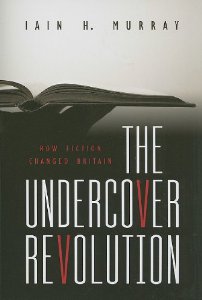
The book-of-the-month this time around is The Undercover Revolution, and it is about how infidel novelists wrecked Great Britain. He gives a detailed treatment of two writers, Robert Louis Stevenson and Thomas Hardy, then moves on to show how a swarm of writers transformed British culture, and concludes with a fine statement of the basic Christian gospel.

Calvin's Daily Devotional

Daily Devotional

July 19

Thine Is My Heart: Devotional Readings from the Writings of John Calvin

by John Calvin (compiled by John H. Kromminga)
Republished from the OPC Website

Bible Text:
I speak not of you all: I know whom I have chosen: but that the scripture may be fulfilled, He that eateth bread with me hath lifted up his heel against me. —John 13:18

Devotional:
"I know whom I have chosen." This very circumstance, that they will persevere, he ascribes to their election; for the virtue of men, being frail, would tremble at every' breeze, and would be laid down by the feeblest stroke, if the Lord did not uphold it by his hand. But as he governs those whom he has elected, all the engines which Satan can employ will not prevent them from persevering to the end with unshaken firmness.

And not only does he ascribe to election their perseverance, but likewise the commencement of their piety. Whence does it arise that one man, rather than another, devotes himself to the word of God? It is because he was elected. Again, whence does it arise that this man makes progress, and continues to lead a good and holy life, but because the purpose of God is unchangeable, to complete the work which was begun by his hand?

The Blessings of Messy Government

Zealots and Revolutionaries

The separation of powers is central to limited government, and limited government is axiomatic for freedom.  The separation of powers divides the key functions of government, effectively balancing one off against the other.  A free press is often regarded as an informal, separate branch of  government (the "fourth estate") in that it freely investigates and scrutinises all branches and powers of government, and informs the people of what those institutions of power, authority, and control are conspiring to do.

The separation of powers makes for messy government at times--well, actually, most of the time.  It means that things can't get done--which is to say that the wills of the separated powers of government are often thwarted.  Either one branch of government is set against another, bringing stalemate, or the end outcome can be quite different from what some governmental powers intended.  Messiness is the price of freedom. 

But to the modern mind, government ineffectualness is an indicator of weakness.

Thursday, 18 July 2013

Books

How the West Really Lost God 

An Interview with Mary Eberstadt 

Justin Taylor 
July 10 2013

 Mary Eberstadt, Senior Fellow at the Ethics and Public Policy Center in Washington, DC, is widely hailed as “one of the most acute and creative social observers of our time” (Francis Fukuyama). George Will has called her “intimidatingly intelligent,” and George Weigel says she is “our premier analyst of American cultural foibles and follies, with a keen eye for oddities that illuminate just how strange the country’s moral culture has become.”

In her latest book, How the West Really Lost God: A New Theory of Secularization,  she seeks to answer the question “How and why has Christianity really come to decline in important parts of the West?”  Her answer cuts against the conventional wisdom, but Jonathan V. Last argues “you cannot understand the real philosophical problems of the West without reading this book."

Mrs. Eberstadt was kind enough to answer a few questions about her argument and its implications.

What led you to write How the West Really Lost God: A New Theory of Secularization? Did it begin more as a hypothesis to be tested or a thesis to be proved?

Like many Americans who have visited Europe, I was struck repeatedly by how secular some of the Continent’s societies are and how empty their churches. So the first reason I started researching into theories of secularization was simple curiosity: What makes formerly Christian precincts lose God?

Calvin's Daily Devotional

Daily Devotional

July 18

Thine Is My Heart: Devotional Readings from the Writings of John Calvin

by John Calvin (compiled by John H. Kromminga)
Republished from the OPC Website

Bible Text:
Against thee, thee only, have I sinned, and done this evil in thy sight: that thou mightest be justified when thou speakest, and be clear when thou judgest —Psalm 51:4

Devotional:
"Against thee, thee only have I sinned." Though all the world should pardon him, he felt that God was the Judge with whom he had to do, that conscience hailed him to his bar, and that the voice of man could administer no relief to him, however much he might be disposed to forgive, or to excuse, or to flatter. His eyes and his whole soul were directed to God, regardless of what man might think or say concerning him.

To one who is thus overwhelmed with a sense of the dreadfulness of being obnoxious to God, there need be no other accuser. God is to him instead of a thousand.